16/01/2026
For many manufacturers, machinery is the backbone of production.
When the time comes to relocate a machine or move an entire facility, the biggest concern is often the same: how can we minimise downtime?
Every hour a machine is offline costs money in lost output, delayed orders and operational disruption. With careful planning and the right expertise, a machine move can be completed smoothly, safely and with far less downtime than many businesses expect.
At ILEX Machinery, we have more than 30 years’ experience relocating machinery for manufacturers, furniture producers and shopfitters across the UK.
Over that time, we have seen how effective preparation and specialist handling can significantly reduce disruption. This guide outlines the best practices for reducing downtime during a machine move, whether you are relocating a single edgebander or transitioning to a larger factory.
Why Downtime Matters During a Machine Move
Downtime affects far more than a few lost hours in a production factory.
When a key machine is offline, production schedules shift, staffing allocation changes and workflow efficiency takes a hit. In busy manufacturing settings, even a short unplanned stoppage can result in late orders, additional costs and pressure on the wider team.
Reducing downtime during a machine relocation allows you to maintain momentum, keep customers satisfied and get back to full output quickly.
A structured approach to planning, moving and reinstalling equipment makes a measurable difference to the overall relocation timeline.
Carry Out a Detailed Assessment Before the Move
The most effective way to reduce downtime is to understand the full scope of the move before anything begins. This includes:
• Identifying which machines are being relocated
• Understanding their role in production
• Documenting their condition
• Noting any specialist requirements such as extraction, power, tooling, or access restrictions
A site survey at both the existing location and the new premises ensures there are no surprises on the day of the move.
This early assessment helps plan the correct equipment, manpower and sequence of work to avoid delays later.
Plan the Move Around Your Production Schedule
A machine move does not need to halt production if it is planned correctly.
For larger relocations, some businesses choose to increase output in the weeks before the move to build a buffer. Others plan phased machine moves so production continues on remaining lines while individual machines are transferred.
The key is to integrate the move into your workflow rather than stopping your workflow for the move.
Work With an Experienced Relocation Team
Machine relocation is highly specialised.
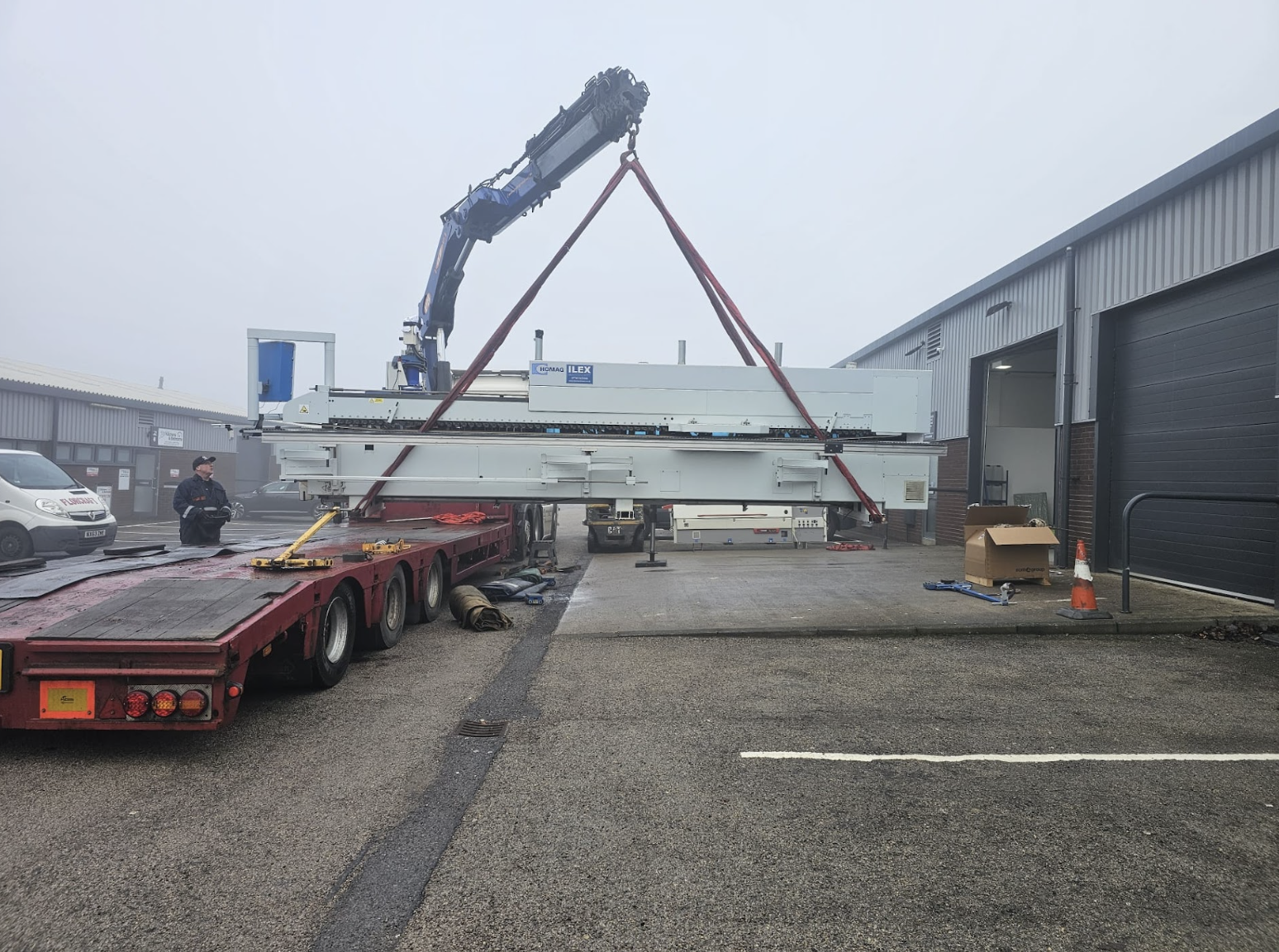
Edgebanders, CNCs, beam saws and drilling units all require correct decommissioning, lifting, transport and commissioning to avoid damage or delays. Working with a team that has hands-on experience with your exact machinery reduces risk and ensures the move happens without unnecessary downtime.
ILEX Machinery has more than three decades of experience relocating machinery across factories of all sizes. That experience allows the team to:
• Anticipate common access issues
• Plan the move around existing lines
• Ensure machines are commissioned correctly
• Minimise the time between shutdown and restart
A relocation handled by experienced engineers is one of the most reliable ways to keep downtime to a minimum.
Prepare the New Site Before Machines Arrive
A surprising amount of downtime occurs not during the move, but after it, when machines are waiting for the new site to be ready.
Preparing the space ahead of time prevents this.
This includes:
• Ensuring the electrical supply and extraction are in place
• Confirming correct floor space and orientation
• Checking access routes for the machine
• Preparing air lines and network connections depending on the machine
When a machine arrives at a fully prepared site, commissioning happens faster and production resumes sooner.
Ensure Commissioning Is Carried Out by Skilled Engineers
Commissioning is the step that brings the machine back into operation.
It involves reconnecting services, calibrating settings, testing movement and confirming the machine is operating within specification.
Poor commissioning is one of the main causes of extended downtime after a move.
A machine that is not set up accurately can cause errors, quality issues or repeated stoppages in the days that follow. Using engineers who understand the machinery ensures the restart is efficient and reliable.
Plan for Contingencies Without Extending the Timeline
Even with detailed planning, machine moves can encounter delays due to access challenges, unexpected site conditions or weather. Building realistic contingency into the schedule prevents downtime escalating, without extending the overall timeline more than necessary.
Experienced teams are able to adjust the plan quickly, work around restrictions and keep the relocation progressing with minimal interruption.
Use the Move as an Opportunity for Maintenance
A machine move naturally involves a period where the machine is offline. This can be an ideal time to carry out maintenance, replace worn parts or check settings that affect performance.
Addressing these tasks during the relocation avoids future downtime and ensures the machine begins operation in the new location running at its best.
Why Work With ILEX Machinery
With more than 30 years of hands-on experience, ILEX Machinery relocates machines with accuracy, efficiency and minimal disruption.
The team manages every stage from decommissioning and transport to commissioning, helping businesses restart production quickly and confidently.
To see how effective planning and expert handling can minimise downtime, read how ILEX Machinery helped Northallerton Joinery
If you are planning a machine move or relocating to a larger site, speak to ILEX Machinery for technical advice and a relocation plan that keeps downtime to a minimum.
Call 07743 625 998 or email sales@ilexmachinery.co.uk.